
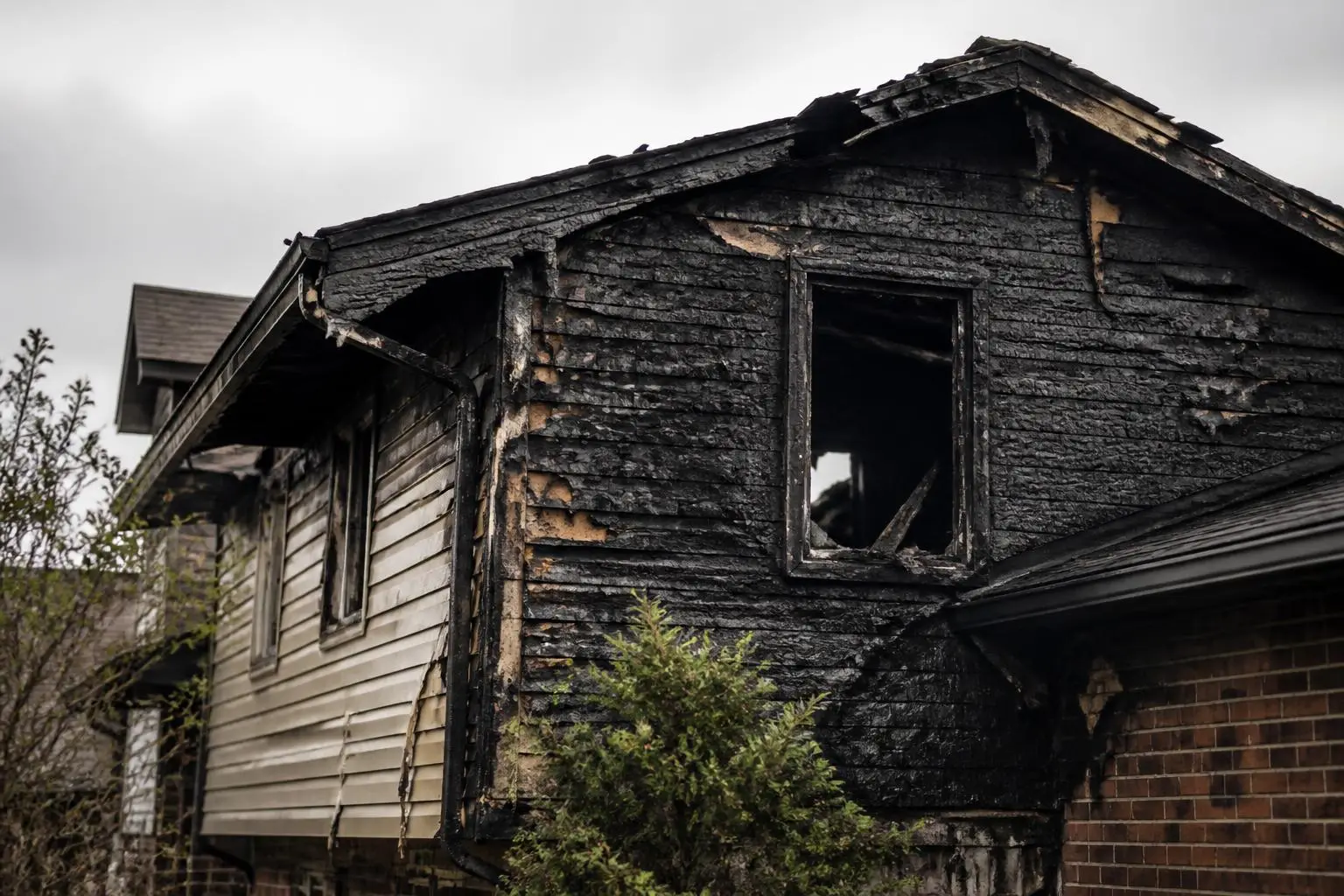
Your house has been damaged by fire, and you may not be able to sleep there tonight.
You might be searching for a hotel, figuring out where your children will stay, or wondering whether your insurance company will help pay for a temporary rental.
At the same time, everyday bills haven't stopped.
You may still have a mortgage payment due, need groceries, or have to replace basic necessities.
One of the first insurance questions homeowners ask is:
"If we can't live in our house, who pays for everything while we're displaced?"
Many homeowners insurance policies include coverage called Loss of Use, which may help with certain additional living costs when a covered loss makes your home uninhabitable.
But the amount, duration, and eligible expenses depend on your policy and circumstances.
This guide explains how the coverage generally works, what questions to ask your insurer, and how to organize your expenses during the first week.
If the fire happened recently, start with our First 72 Hours After a House Fire: Step-by-Step Homeowner Guide.
Quick Answer: Does Homeowners Insurance Pay for a Hotel After a House Fire?
It may.
Many homeowners policies include Loss of Use coverage, also called Coverage D, which may provide Additional Living Expenses (ALE) when a covered loss makes the home uninhabitable.
Depending on the policy and circumstances, eligible expenses may include:
- Hotel accommodations
- Temporary rental housing
- Reasonable additional meal costs
- Certain additional transportation costs
- Some pet accommodation expenses
- Other necessary increases in living expenses
Coverage is not unlimited.
Your policy may have a dollar limit, a time limit, restrictions on certain expenses, or other conditions.
Call your insurer promptly and ask whether your Loss of Use coverage applies, what accommodation is authorized, and how payments will be handled.
1. What Is Loss of Use Coverage After a House Fire?
Loss of Use is a type of homeowners insurance coverage that may help when you cannot live in your home because of a covered loss.
One component is Additional Living Expenses.
ALE is generally intended to address qualifying increases in normal living expenses caused by the displacement, rather than replace every ordinary household expense.
What is the difference between Loss of Use and ALE?
Loss of Use is the broader coverage category.
Additional Living Expenses is a common component of that coverage.
Depending on the policy, Loss of Use may also address other situations, such as certain rental income losses or restrictions on access to the property.
For an owner-occupied home affected by fire, ALE is often the most immediately relevant part.
What does "additional" mean?
Imagine your household normally spends $600 per month on groceries.
After the fire, you may need to purchase more prepared meals because you are staying somewhere without a kitchen.
If your qualifying food expenses increase to $950, the additional $350 may be considered for ALE reimbursement, depending on your policy and the circumstances.
That does not mean the entire $950 is automatically reimbursable.
The insurer may consider your normal spending, the reasonableness of the additional cost, and policy requirements.
2. Who Pays for a Hotel Immediately After a House Fire?
Your insurer may be able to arrange accommodations, authorize direct billing, or reimburse eligible expenses.
However, the process varies.
What should I ask during the first insurance call?
Ask:
- Does my policy provide Additional Living Expenses coverage?
- Is my home considered uninhabitable for coverage purposes?
- Can you arrange a hotel tonight?
- Is there a nightly rate or accommodation limit?
- Can the hotel bill the insurer directly?
- If I pay upfront, what documentation is required?
- Can I request an advance?
- Who approves a longer-term rental?
Record the name of the person you speak with and any instructions provided.
What if I cannot afford to pay for a hotel upfront?
Tell your insurer immediately.
Ask whether direct billing, an advance, or another arrangement is available.
If you need urgent shelter before insurance assistance is arranged, contact local emergency assistance organizations, such as the American Red Cross, to ask about available support.
Do not assume that every emergency lodging expense will automatically qualify for reimbursement.
3. Will Insurance Pay for an Airbnb or Temporary Rental?
It may, if the expense is eligible under your policy and appropriate to your displacement.
For a short period, a hotel may be sufficient.
If the home requires extensive repairs, a longer-term rental may be more practical.
The insurer may consider household size, location, expected repair duration, and the need to maintain a reasonably comparable standard of living.
Can I rent a house instead of staying in a hotel?
Potentially.
Ask your insurer before committing to a lease, particularly one involving significant deposits or cancellation penalties.
Clarify:
- The approved monthly amount
- The expected rental period
- Whether deposits are covered
- Utility expenses
- Furniture or housewares
- Pet-related fees
- Lease cancellation terms
- What happens if repairs take longer
Keep copies of rental agreements, invoices, and payment records.
What if the insurance company offers a rental that's too small?
Explain your household's actual needs.
For example, the number of occupants, accessibility requirements, or reasonable proximity to work and school may be relevant.
Ask the insurer to explain the accommodation standard used under your policy.
4. Does Insurance Pay for Meals and Groceries After a House Fire?
Some additional meal expenses may qualify under ALE.
But insurance generally does not pay every food expense simply because a fire occurred.
The question is often how much your necessary living expenses increased because you could not use your home normally.
Example: Additional meal expenses
| Expense | Before the fire | During displacement |
|---|---|---|
| Monthly groceries | $600 | $250 |
| Restaurants and prepared meals | $150 | $800 |
| Total food spending | $750 | $1,050 |
In this hypothetical example, food spending increased by $300.
That difference may be relevant to an ALE calculation, but actual reimbursement depends on policy terms, reasonableness, and the insurer's review.
What receipts should I keep?
Save:
- Restaurant receipts
- Grocery receipts
- Food delivery records
- Hotel invoices
- Temporary rental invoices
- Laundry expenses
- Additional transportation expenses
- Pet boarding or accommodation expenses
Keep the date, amount, purpose, and any explanation needed to show why the expense was additional.
5. Does Loss of Use Cover Pets, Transportation, and Laundry?
Potentially.
Some policies may cover reasonable additional expenses resulting from displacement, depending on the circumstances.
Examples may include:
Pet accommodations: Additional boarding costs or pet-related lodging charges when pets cannot stay with you.
Transportation: Increased commuting costs caused by living farther from work or school.
Laundry: Additional laundromat expenses when your temporary accommodation does not have laundry facilities.
Storage: Certain necessary additional storage expenses, subject to policy terms.
The important distinction is whether the expense is a qualifying increase caused by the covered displacement.
Ask your insurer before making large commitments.
6. How Long Does Additional Living Expenses Coverage Last?
There is no universal time limit that applies to every homeowners policy.
Coverage may depend on the time reasonably required to repair or replace the damaged property, policy limits, and other conditions.
Some policies impose specific time or dollar limits.
What if repairs take longer than expected?
Contact your insurer before your current accommodation authorization expires.
Ask:
- How much ALE coverage remains?
- Is there a maximum number of months?
- What documentation is needed for an extension?
- How does the insurer determine the reasonable repair period?
- What happens if delays occur?
Keep records of repair schedules, contractor communications, and other circumstances affecting the timeline.
What if I decide not to rebuild?
The policy may contain different provisions addressing how long eligible additional living expenses continue or what alternative arrangements apply.
Ask your insurer to identify the relevant policy terms.
Do not assume that choosing not to rebuild automatically produces the same payment as a completed repair.
7. Do I Still Have to Pay My Mortgage After a House Fire?
Generally, yes.
A house fire does not automatically suspend your mortgage.
Even if the property is uninhabitable, your mortgage obligation usually continues unless your lender or servicer agrees to a different arrangement.
Does ALE pay my mortgage?
ALE generally addresses qualifying additional living costs rather than replacing your normal mortgage payment.
Your existing mortgage is typically an ongoing expense, not an additional cost created by displacement.
If you cannot afford the payment, contact your mortgage servicer promptly.
Ask about:
- Disaster-related hardship assistance
- Temporary forbearance options
- Payment arrangements
- Available loss-mitigation programs
Any assistance depends on the lender, loan type, eligibility, and agreed terms.
Why is my mortgage company listed on the insurance check?
For structural damage claims, insurance payments may include the mortgage lender as a payee because of its financial interest in the property.
The lender may have procedures for endorsing or releasing funds as repairs progress.
Contact the lender's insurance-loss department and ask what documents are required.
8. What Is the First Insurance Check After a House Fire For?
After a fire, your insurer may issue one or more payments at different stages.
A payment could relate to emergency living expenses, structural damage, personal property, or another part of the claim.
The first payment is not necessarily the final payment.
What should I ask before depositing an insurance check?
Ask:
- Which coverage does this payment come from?
- Is it an advance, partial payment, or final settlement?
- Is any depreciation being withheld?
- Are additional payments possible?
- Is the mortgage lender required to endorse it?
- Am I being asked to sign a release?
- Does accepting or depositing the payment have any stated legal effect?
Read any accompanying documents carefully.
Does cashing the first insurance check close my claim?
Not automatically in every case.
The effect depends on the payment, accompanying language, applicable law, and whether a settlement or release is involved.
Do not assume that depositing a check always closes the claim, or that it can never affect your rights.
If the payment is described as final or accompanied by a release, obtain clarification before proceeding.
9. What If the House Is Only Partially Damaged?
A home does not necessarily need to be completely destroyed for displacement to occur.
A partial fire may affect electrical systems, essential utilities, structural safety, or other conditions that prevent safe occupancy.
However, a home being inconvenient to occupy is not automatically the same as being uninhabitable under the insurance policy.
Who decides whether the house is habitable?
Safety authorities, building officials, qualified professionals, and the insurer may have different roles.
A building official may restrict occupancy for safety reasons.
The insurer evaluates whether the circumstances satisfy the applicable coverage terms.
If the insurer says the home is habitable but you have documented safety concerns, ask for an explanation and whether further qualified evaluation is appropriate.
Related: Document the Damage Before Major Decisions.
10. How to Track Additional Living Expenses During the First Week
The easiest time to organize expenses is when they begin.
You don't need specialized software.
A notebook, spreadsheet, or simple receipt log can help.
Example ALE expense tracker
| Date | Expense | Amount | Why it was necessary |
|---|---|---|---|
| Day 1 | Hotel | $185 | Home not safe to occupy |
| Day 2 | Additional meal cost | $45 | No access to kitchen |
| Day 3 | Laundry | $24 | Temporary lodging without laundry |
| Day 4 | Extra transportation | $32 | Longer commute from hotel |
These are illustrative amounts, not reimbursement rates or guaranteed eligible expenses.
Keep these records together
- Hotel and rental invoices
- Restaurant and grocery receipts
- Transportation receipts
- Pet boarding receipts
- Insurance emails
- Adjuster instructions
- Records of payments and advances
- Repair timeline updates
If you receive an ALE advance, track how the money is spent and keep supporting receipts.
First-Week Temporary Housing and Expense Checklist
Immediate housing
Financial organization
Longer-term planning
Need Help Understanding the Damage That's Keeping You Out of Your Home?
Temporary housing decisions often depend on the condition of the property and the work required to make it safe and usable again.
Understanding the damage can help you organize questions for the insurer, restoration professionals, and other parties involved in recovery.
Request a No-Cost On-Site Fire Assessment
National Property Service Group helps homeowners document observed property damage and coordinate appropriate recovery services.
An assessment may help identify areas requiring further professional evaluation and establish a record of the property's condition.
What is your property concern?
Pick the closest match, we'll confirm during the assessment.
There is no obligation to hire a restoration contractor. Assessment availability and scope depend on location and service coverage.
NPSG does not determine insurance coverage, approve ALE expenses, or negotiate claims.
Frequently Asked Questions About ALE After a House Fire
Does homeowners insurance pay for a hotel after a fire?
Many policies include Loss of Use coverage that may pay eligible temporary lodging costs when a covered fire makes the home uninhabitable. Coverage depends on policy terms, limits, and circumstances.
How much does insurance pay for temporary housing?
There is no universal amount. Your policy may contain dollar limits, time limits, and standards for reasonable accommodation. Ask your insurer to explain your available coverage.
Can I stay in an Airbnb after a house fire?
Potentially. Temporary rental costs may qualify under ALE, subject to the policy and insurer's requirements. Confirm eligibility and limits before making a significant commitment.
Does ALE cover restaurant meals?
It may cover qualifying additional meal expenses above your normal spending, depending on policy terms and the circumstances.
Does insurance pay for pet boarding after a fire?
Some policies may cover reasonable additional pet accommodation expenses resulting from covered displacement. Ask your insurer about eligibility and documentation.
How long will insurance pay for a hotel?
Coverage duration varies by policy and circumstances. It may depend on applicable limits and the reasonable period required to repair or replace the home.
Do I still pay my mortgage if my house burns down?
Generally, yes. The mortgage usually continues unless your lender or servicer approves a different arrangement.
Can I get money from insurance before repairs begin?
Some insurers may provide advances or partial payments for eligible expenses or covered damage. Ask what payments are available and what each payment represents.
Does cashing an insurance check mean I accepted a final settlement?
Not necessarily. The legal effect depends on the payment, accompanying terms, and applicable law. Review any release or final-settlement language carefully.
What if my insurer says the house is livable but I disagree?
Ask for the basis of the decision and document the specific safety or habitability concerns. Appropriate building officials or qualified professionals may need to evaluate the property.
Can I receive ALE if only one room burned?
Possibly. The issue is whether a covered loss makes the home uninhabitable under the policy, not simply how many rooms were directly burned.
Can NPSG help with my ALE claim?
NPSG can help document property conditions and coordinate appropriate recovery services. It does not determine ALE eligibility, calculate insurance entitlements, or negotiate claims.
Continue Your Fire Recovery Research
- What to Do in the First 72 Hours After a House Fire
- What Not to Do After a House Fire
- Before You Sign a Fire Restoration Contract
- Document the Damage Before Major Decisions
Authoritative Homeowner Resources
- NAIC: What Are Additional Living Expenses and How Can Insurance Help?
- NAIC: Post-Disaster Claims Guide
- NAIC: What You Should Know About Settling a Homeowners Insurance Claim
- United Policyholders: Roadmap to Recovery
- American Red Cross: Home Fire Recovery
This guide provides general educational information for U.S. homeowners. Insurance coverage, reimbursement limits, payment procedures, and mortgage obligations depend on individual circumstances, policy terms, and applicable law. NPSG does not provide legal advice, insurance coverage determinations, or public adjusting services.